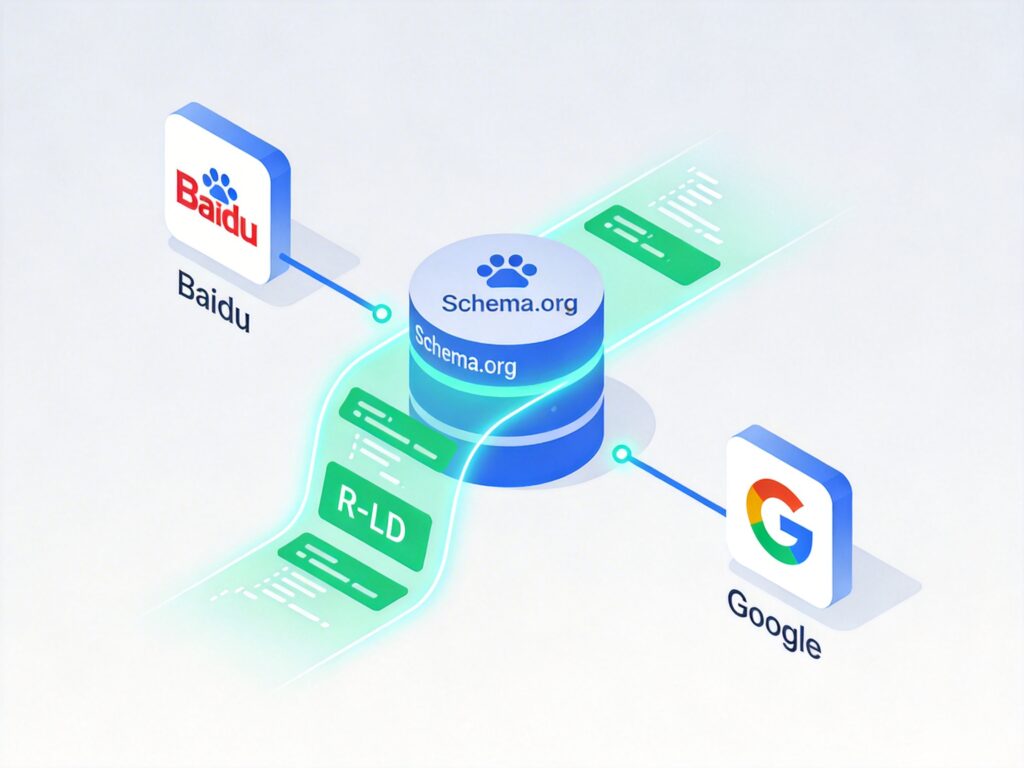
Does Baidu Support Schema.org Structured Data?
Yes, the Baidu search engine supports and recommends using structured data markup based on the Schema.org vocabulary (in Microdata, JSON-LD, or RDFa format).
Structured data helps Baidu understand page content more accurately, potentially generating richer snippets in search results (like ratings, prices, event dates) to improve user experience.
Baidu's Official Position
According to Baidu Search Resources Platform:
It greatly helps improve the user experience on the results page. Whether it is included in the ranking algorithm is still unknown.
This means:
- Explicit Support: Baidu encourages webmasters to use structured data to optimize search result displays.
- Experience First: Its primary value is enhancing the presentation and user experience of search results.
- Ranking Impact Uncertain: Baidu has not confirmed it as a direct ranking factor, but better presentation may indirectly increase clicks and traffic.
Comparison with Google
Google's position is more explicit:
You can mark up only some properties of an item; you don't have to mark up everything. However, marking up as much content as possible helps search engines understand it more accurately and display it in the most useful way. Google does not use markup for ranking, but rich results can make your site more prominent in search, potentially increasing traffic.
Key similarities and differences:
| Aspect | Baidu | |
|---|---|---|
| Supported Standard | Schema.org | Schema.org |
| Preferred Format | Recommends JSON-LD | Prefers JSON-LD |
| Direct Ranking Factor | Unconfirmed | Explicitly not a direct factor |
| Core Value | Improves search result experience | Generates rich results, boosts CTR |
| Markup Advice | Mark key content | Mark as many relevant properties as possible |
How to Get Started
For developers or webmasters adding structured data:
- Choose Content to Mark: Identify the core content type (e.g., Article, Product, LocalBusiness, Event).
- Choose Format: Use JSON-LD, the recommended, easiest-to-maintain format for both engines. Insert the script in the
<head>or<body>. - Use Tools: Use Schema.org to find properties, and validate with the Google Rich Results Test or Baidu Structured Data Tool.
- Deploy & Monitor: Deploy validated code and monitor via webmaster tools.
Example Code (JSON-LD for an Article):
<script type="application/ld+json">
{
  "@context": "https://schema.org",
  "@type": "Article",
  "headline": "Example Article Title",
  "description": "Article summary.",
  "image": "https://example.com/image.jpg",
  "datePublished": "2023-10-01T08:00:00+08:00",
  "author": {
    "@type": "Person",
    "name": "Author Name"
  },
  "publisher": {
    "@type": "Organization",
    "name": "Publisher Name",
    "logo": {
      "@type": "ImageObject",
      "url": "https://example.com/logo.png"
    }
  }
}
</script>
Summary & Recommendations
Adding Schema.org structured data is a key SEO best practice. While its direct ranking impact is unconfirmed, its value for improving search result appeal, click-through rates, and user experience is clear. Recommendations:
- Prioritize adding markup to core content pages (products, articles, business info).
- Use the mainstream JSON-LD format for easier maintenance.
- Regularly test markup with official Baidu and Google tools.
- Follow official documentation for updates on supported types and requirements.