From Zero to One: The Complete Guide to Planning, Building, and SEO for an English Affiliate Marketing Website
An English affiliate marketing website is a significant income source for many digital marketers. This guide provides a complete framework for planning, building, and optimizing such a site for Google SEO, suitable for both beginners and experienced operators.
Core Principle: Simplicity and Focus
The primary rule for building an Amazon Associates or other affiliate site is to keep it simple. The site should focus on a specific niche, providing high-quality, valuable content while avoiding a cluttered, unfocused approach.
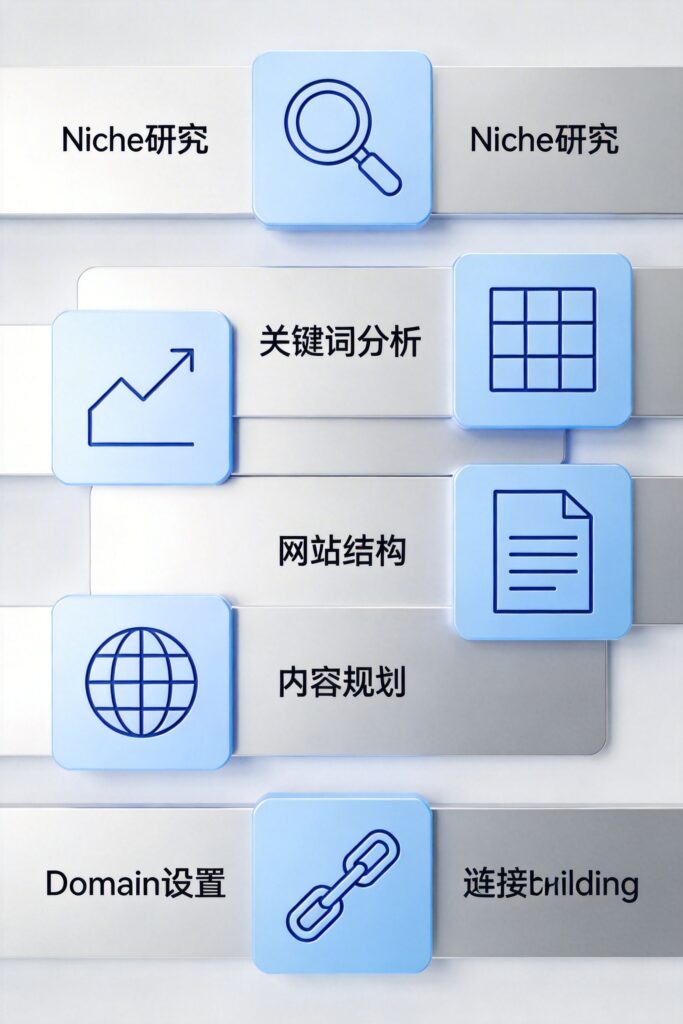
Six-Step Planning Method for an English Niche Website
Step 1: Find Your Direction and Niche
Choose a field you are interested in or have expertise in, and then narrow it down. For example, instead of the broad topic of "fitness," choose a more specific theme like "home dumbbell workouts" or "postpartum recovery yoga." A more targeted niche typically means less competition and makes it easier to establish authority.
Step 2: Deep Research on Products and Competition
- Know Your Products: Understand the features, pros, cons, and user reviews of the products you will promote.
- Keyword Analysis: Use keyword tools (see below) to analyze user search intent, search volume, and competition difficulty.
- Competitor Analysis: Study top-ranking competitor websites. Analyze their content strategy, site structure, backlink sources, and user experience. Learn from their successful models.
Step 3: Plan Your Website Structure (Top-Level Design)
This is a crucial step that requires careful forethought. Plan a clear navigation menu, category pages, and content hierarchy. A good structure benefits both user experience and search engine crawlers. Avoid major structural changes later on.
Step 4: Develop a Keyword and Content Plan
Based on your keyword research, create a detailed content publishing schedule. Plan articles or pages for each core topic and long-tail keyword, and determine a publishing frequency.
Step 5: Register a Domain and Build the Site
- Choose a domain name relevant to your niche and easy to remember.
- Use a mature CMS like WordPress to build the site, selecting a fast-loading, mobile-friendly theme.
- Start publishing high-quality content according to your plan.
Step 6: Link Building and Continuous Optimization
- Link Building: Acquire quality backlinks through guest posts, high-quality Web 2.0 platforms (e.g., Medium), infographic promotion, and expert roundups.
- Social Media Traffic: Share content on relevant social platforms to attract initial traffic.
- Continuous Updates: Regularly update site content and continuously optimize site performance and content based on data analysis (e.g., Google Search Console).
Essential Tools and Resources
Keyword Research Tools
- Google Keyword Planner: A basic tool suitable for getting search volume data.
- Ahrefs / SEMrush: Industry-leading SEO tool suites offering comprehensive keyword, competitor, and backlink data.
- KWFinder / Long Tail Pro: Excellent for finding long-tail keywords with relatively simple operation.
Content Creation (Writers)
If your English writing skills are limited, consider hiring native writers on freelance platforms like Upwork or Fiverr. Provide clear writing briefs and keyword guidance.
Detailed Link Building Strategy
A robust link building strategy is often tiered:
- Tier 1 (Foundation): High-quality links pointing directly to your site, such as guest posts on authoritative websites.
- Tier 2 (Support): Links pointing to your Tier 1 backlinks, for example, sharing content containing your guest post link on Web 2.0 sites, forums, or social media to boost their authority.
Note: Link quality is far more important than quantity. Avoid spammy link farms.
On-Page SEO Essentials
- Content Length & Depth: For competitive keywords, content should be as comprehensive and in-depth as possible. Many successful articles exceed 2000 words, but the goal is to provide complete value, not keyword stuffing.
- Internal Linking: Add relevant internal links within article bodies, conclusions, or sidebars. This helps distribute page authority, reduce bounce rates, and improve user experience.
- Anchor Text Strategy: Use varied anchor text to avoid over-optimization. A common reference ratio is:
- 50% brand or generic anchors (e.g., "click here," "learn more")
- 25% partial match keywords
- 25% exact match keywords
Monitoring and Testing Tools
- CrazyEgg / Hotjar: Use heatmaps, scroll maps, and A/B testing for user behavior analysis to optimize page layout and improve CTR and conversion rates.
- Monitor Backlinks / Ahrefs Alerts: Regularly monitor your backlink profile to identify and disavow harmful links from low-quality, irrelevant sites, preventing Google penalties.
Summary and Final Advice
Building a successful English affiliate marketing website requires patience and consistent effort. The keys are: choosing the right niche, creating excellent content, building a logical site structure, acquiring high-quality natural backlinks, and continuously analyzing data and optimizing. For areas outside your expertise (like design, writing, or development), outsourcing via platforms like Fiverr or Upwork can significantly boost efficiency. Staying informed about Google algorithm updates and industry best practices is essential for long-term success.